How to Create a Warm Minimalist Home: The Ultimate Design Guide
Most people want their home to feel welcoming, which usually means embodying a sense of warmth. However, in our quest for clean, clutter-free spaces, many of us fall into the trap of traditional minimalism which can often come across as cold and sterile.
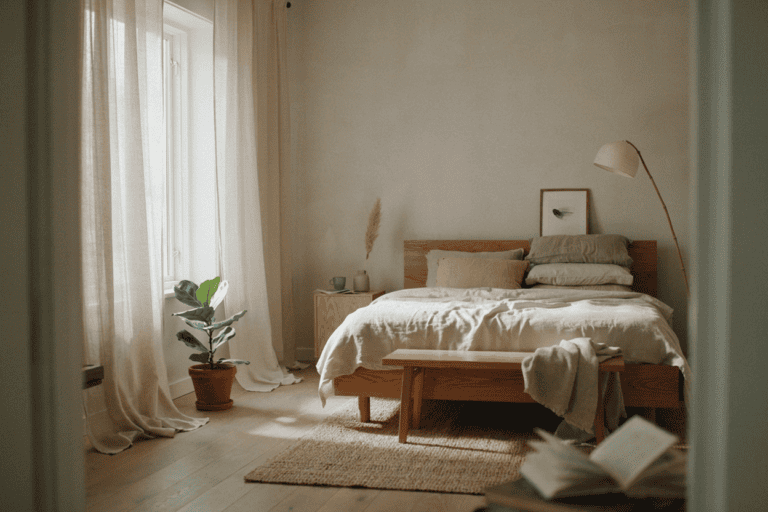
This is where the idea of warm minimalism comes in. It’s a design philosophy that still incorporates the clean lines and intentionality of traditional minimalism but layers in things like organic textures and warmer tones to create a home or space that feels calm yet deeply inviting.
In this article we’ll explore the foundational rules to achieve this aesthetic in your own home.
What is Warm Minimalism?
Warm minimalism embodies the concept of functional curation, which is an interior design philosophy where every single item in a room is chosen simultaneously for its practical utility as well as its aesthetic beauty. It is the bridge between strict, cold minimalism (which removes items for visual emptiness) and maximalism (which accumulates items for visual interest).
Choosing Warm Minimalist Paint Colors
Minimalist spaces tend to have stark, blue-tone whites (often called “cool whites”) which completely kills the warm minimalist vibe because they trigger an involuntary psychological and physiological response that mimics a clinical or freezing environment. Cool whites also have something called a “higher color temperature”, which matches the harsh fluorescent lighting found in hospitals, laboratories, and commercial offices
To achieve a true warm minimalist vibe, you need a cohesive color palette that mimics the natural world. Warm minimalism relies on low-contrast, earth-derived tones that absorb light softly rather than reflecting it harshly.
- The cream and alabaster family: Heavy cream, ivory, soft alabaster, and warm milk. This family replaces the stark, blinding whites of ultra-modern design.
- The taupe and oatmeal family: Greige (warm gray-beige), raw oatmeal, pale mushroom, and warm taupe. They mimic the tones of natural stone, travertine, and dry soil, they provide an instant sense of architectural calmness and psychological security.
- The earthy ochre and terracotta family: Muted clay, sienna, soft mustard, tanny sand, and faded terracotta. They bring the biological warmth of heat, brick, and desert landscapes into a room while remaining incredibly sophisticated and understated.
- The sage and olive family: Faded sage, dusty olive, and pale eucalyptus. Green is technically a cool color, but when it has a heavy yellow or gray undertone, it becomes an honorary warm neutral.
- The warm walnut and amber family: Honey oak, rich walnut, amber, and unrefined wood tones. This family is reserved for your furniture, flooring, and architectural details.
The Golden Rule of Warm Minimalist Palettes
Keep contrast low. When building your palette from these families, choose 3 to 4 shades that sit close to each other in intensity.
How to Embody Warm Minimalism Using Texture
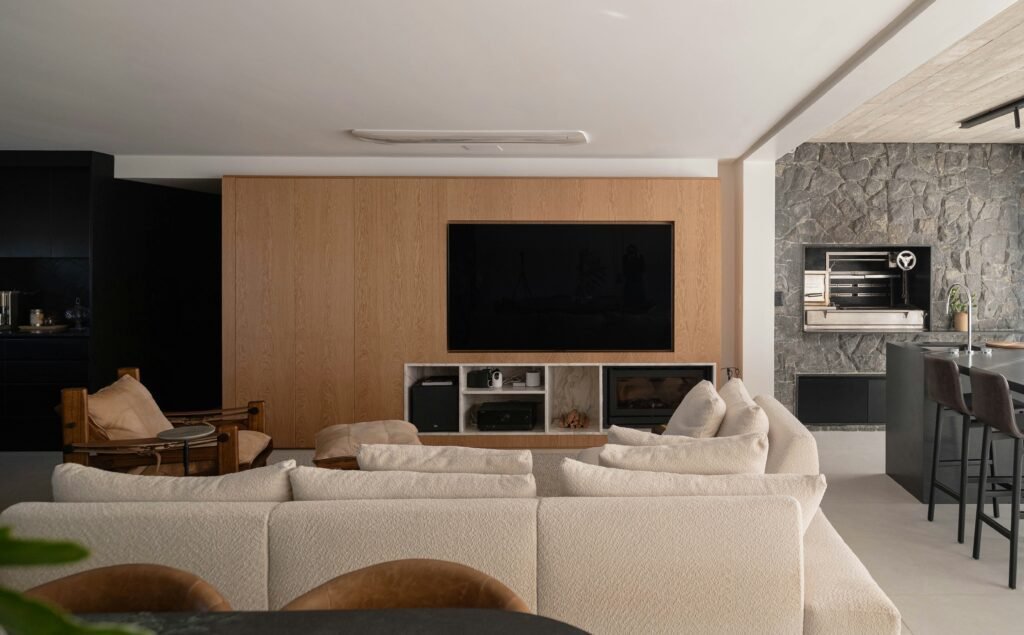
There’s a common misconception that you need to fill a room with items to make it feel warm and cozy. With warm minimalism you can avoid this and let the surfaces do the heavy lifting instead.
When you strip away the physical clutter, the walls, floors, and large furniture pieces can no longer be blank afterthoughts. They must possess inherent visual texture, depth, and character to carry the room on their own.
Material Ideas (The Foundation):
These are the physical, raw elements you should look for when choosing furniture, flooring, architectural finishes, and hardware.
- Raw, Open-Grain Woods: Light oak, rich walnut, and honey-toned elm with visible knots and natural grain.
- Porous, Matte Stones: Unpolished travertine, honed limestone, soapstone, and matte terracotta tiles.
- Earth-Derived Plasters: Limewash paint, Roman clay, and subtle micro-cement for tactile wall finishes.
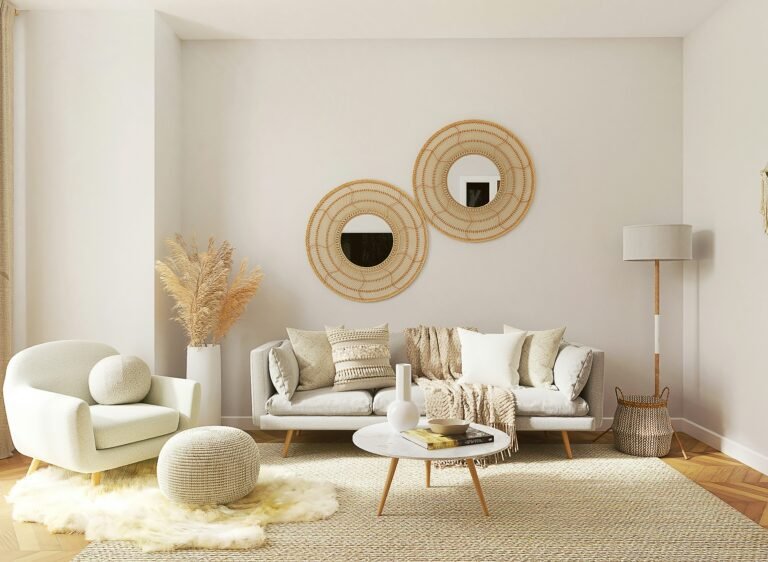
- Woven Botanicals: Raw jute, sisal, hand-woven rattan, sea grass, and cane webbing.
- Living Metals: Unlacquered brass, oil-rubbed bronze, brushed copper, and blackened iron that tarnish naturally.
- Artisanal Ceramics: Matte stoneware, unglazed clay pottery, and hand-thrown ceramic tableware.
Tactile Textures (The Layers):
These are the fabrics and surface finishes that soften the hard edges of a room and absorb light to create a warm atmosphere.
- Waffle Weave: Deeply puckered, geometric cotton grid patterns for towels and throw blankets.
- Chunky Bouclé: Looped, curled textile that adds instant weight and micro-shadows to large furniture.
- Slubby Heavy Linen: Relaxed, crinkled woven fabric with irregular lines for curtains and bedding.
- Nubby Wool: Densely knotted, thick wool rugs and heavy blankets that provide structural warmth.
- Brushed Cotton: Completely matte, downy fabric that feels velvety-soft to the touch.
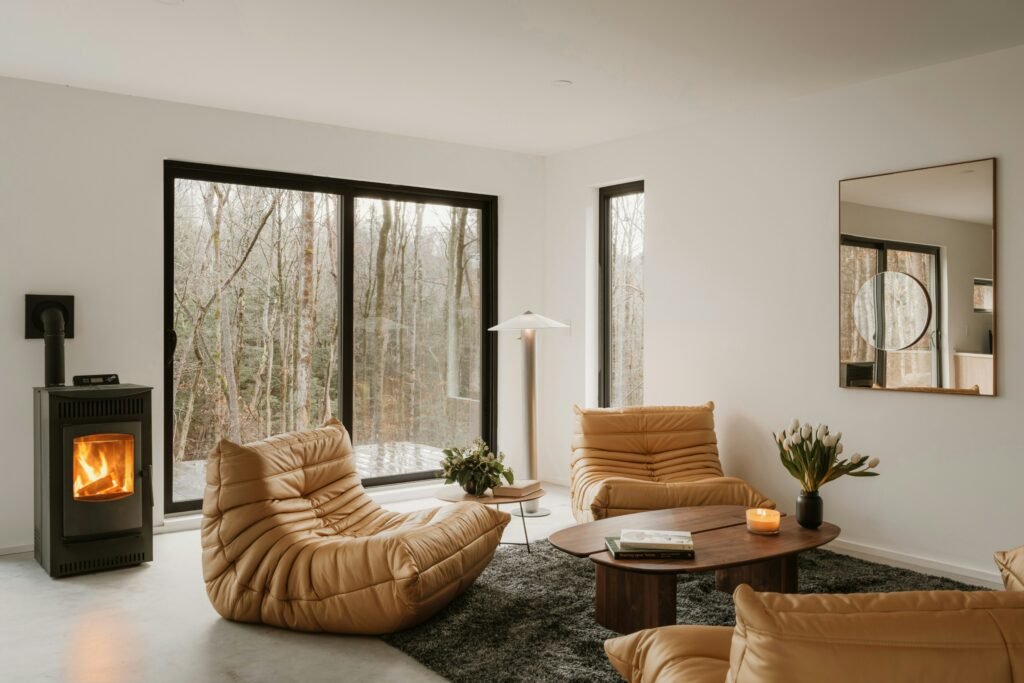
- Distressed Leather: Matte, aniline, or nubuck leather that shows natural wear and character.
- Suede or Velvet: Low-pile, ultra-soft textures that drink in light and soften sleek lines.
Layering Warm Lighting
Harsh overhead lighting breaks the entire mood of warm minimalism because it flattens the space, creates sharp shadows, and makes every surface feel colder than it is. Warm minimalism depends on softness, depth, and a gentle glow, and ceiling lights, especially bright white ones, tend to wash out textures, neutral tones, and the warm atmosphere you’re trying to build.
Getting rid of harsh overhead lighting lets the room breathe. It allows you to shape the light intentionally instead of blasting it from above.
You can approach indoor lighting from multiple points such as the floor and tables. Accent floor lamps create height and direction, pulling light upward in a soft, diffused way. Hidden LED strips tucked behind furniture, under shelves, or along architectural lines add a warm halo that feels natural and atmospheric, almost like candlelight but cleaner.
Ambient table lamps fill in the gaps with a gentle glow that makes corners feel inviting instead of dark or empty. When these sources work together, the room feels warm, dimensional, and calm, never harsh.
The most important detail is choosing bulbs with a warm temperature, ideally 2700K, because that tone brings out the beige, cream, and wood textures that define warm minimalism. Cooler bulbs make neutrals look gray and lifeless, while 2700K creates that soft, golden, evening‑light feeling that makes the whole space feel serene.
Mastering the Warm Minimalist Layout
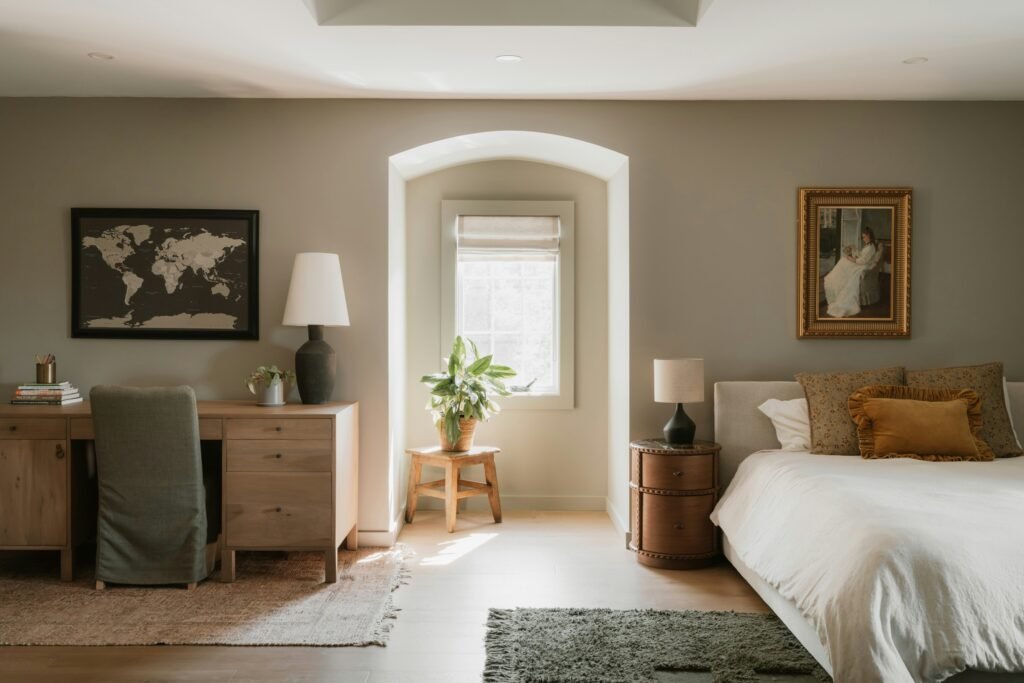
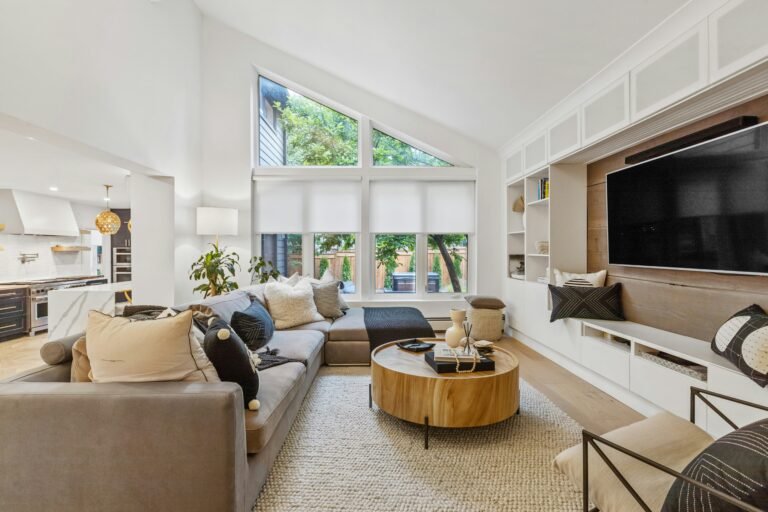
Low‑profile furniture is one of the quiet “power moves” in warm minimalism because it changes how the room feels without adding anything extra. Keeping furniture visually low makes the room feel taller, calmer, and more breathable, which is exactly the warm‑minimalist vibe.
- Visual height illusion: When furniture sits lower to the ground, your eye naturally travels upward to the open wall space. This makes the room feel taller, even if the ceilings are average height.
- More negative space: Warm minimalism relies on breathing room. Low furniture leaves a more visible wall and air above it, creating that soft, uncluttered calm.
- Soft, grounded energy: Lower silhouettes feel relaxed and cozy rather than formal or rigid. This supports the warm, lived‑in minimalism vibe instead of sharp, gallery‑style minimalism.
- Better light flow: Tall furniture blocks natural light pathways. Low pieces allow sunlight to move freely across the room, making neutrals glow and textures feel warmer.
- Neutral palette harmony: Beige, cream, taupe, and soft wood tones look best when they’re not visually competing with bulky vertical shapes. Low furniture keeps the palette feeling cohesive and serene.
Curved‑edge furniture also works beautifully in warm minimalism because it softens the straight architectural lines that dominate most rooms. Walls, door frames, windows, and built‑ins are all rigid verticals and horizontals; when every major element is straight, the space can feel a little sharp or boxy.
Introducing rounded couches, circular coffee tables, or soft‑edge ottomans adds a gentle counterbalance. The curves create a visual “exhale” that makes the room feel calmer and more welcoming.
Curating Art and Foliage
Large‑scale minimalist abstract art works so much better than busy gallery walls. A single oversized piece creates a sense of spaciousness because it gives the eye one clear focal point instead of dozens of competing shapes and frames.
Gallery walls introduce visual noise, breaking the serene flow that warm minimalism depends on. A large abstract canvas, especially in soft neutrals or muted earth tones, feels like part of the architecture rather than an added decoration. It reinforces the room’s quiet, airy mood and lets textures, light, and negative space do the heavy lifting.
The same principle applies to foliage. Intricate, colorful floral arrangements add too much detail and contrast, pulling attention away from the calm palette and soft lines of the room. Oversized single branches, like eucalyptus or olive, create a sculptural, organic moment without clutter.
Their long, simple silhouettes echo the minimalism of the space, and placing them in a matte ceramic vase keeps the look grounded and natural. Instead of a burst of color and complexity, you get a gentle, architectural gesture that feels harmonious with warm woods, linen textures, and neutral tones. One branch can do more for the aesthetic than an entire bouquet because it preserves the quiet, spacious feeling that defines warm minimalism.
This aesthetic isn’t something you buy your way into, it’s a slow, intentional editing process. Warm minimalism comes from removing what feels loud, unnecessary, or distracting so the pieces that remain actually matter.
When you strip away excess, the room starts to feel calmer, more open, and more connected to the natural materials and soft textures that define the style. It’s less about chasing a look and more about leaning into comfort, choosing items that feel grounded and warm, and letting the space breathe.
At its core, warm minimalism is simply choosing what supports your life and letting go of everything that doesn’t.