From Routine to Ritual: Turning Your Hobbies Into Meaningful Daily Practices
A routine is something you do regularly, often because it helps you get something done.
You brush your teeth in the morning. You tidy the kitchen after dinner. You exercise at a certain time. You might write for twenty minutes every evening because you’ve decided that’s your writing habit.
Routines are practical. They’re about consistency, efficiency and completing a task.
A ritual can contain some of that same repetition, but there’s another layer to it. A ritual is about intention, meaning and presence. It’s less about simply doing something and more about how and why you’re doing it.
The action itself might not change much.
You could still sit down and write. You could still go for your walk. You could still pick up your crafting supplies.
The difference is the experience you create around it.
Instead of thinking, “I need to get this done,” you might think, “This is the little part of my day where I get to slow down and be creative.”
That shift can make something very ordinary feel much more meaningful.
When your hobby starts feeling like another task
It’s surprisingly easy for a hobby to become a routine without you realizing it.
You might notice that you feel guilty when you skip it, even when you genuinely need a break. You might be more concerned with maintaining a streak than enjoying the activity itself.
You might also find yourself multitasking constantly. You’re writing while checking messages or crafting while scrolling.
Another sign is that your attention has shifted toward the outcome.
You’re thinking about how many pages you wrote, how much you finished, how many projects you completed or whether you’re improving quickly enough.
There’s nothing wrong with having goals for your hobbies. Goals can be satisfying. But when the result becomes more important than the experience, your hobby can start feeling like work.
And that’s often when the enjoyment starts to disappear.
Why turn a hobby into a ritual?
The point isn’t to make your hobby more disciplined.
It’s almost the opposite.
Turning a hobby into a ritual can take some of the pressure away because you’re creating space to experience the activity rather than constantly measuring what you get from it.
You may find that you enjoy it more because you’re actually present for it. It can give your mind a small reset between the other parts of your day, leaving you feeling refreshed rather than mentally checked off another obligation.
It can also make consistency feel gentler.
You don’t have to do your hobby perfectly or for an impressive amount of time. You’re simply creating a small, recognizable moment in your day or week that belongs to you.
How to turn a hobby routine into a ritual
You don’t need a complicated morning routine, a perfectly decorated corner or an hour of uninterrupted free time.
Start with one hobby.
Choose the activity that you want to feel more connected to again. Maybe it’s writing, crafting, reading, walking, cooking or something else you naturally enjoy.
1. Decide what you want the experience to feel like
Before adding anything to your routine, pause and ask yourself why this hobby matters to you.
Maybe you want to feel creative. Maybe you want to slow down. Maybe you want some quiet time after a busy day. Maybe you simply want to experience the pleasure of making something with your hands.
Your intention can be very simple.
“I want this time to help me slow down.”
“I want to enjoy being creative.”
“I want to give myself a quiet transition between parts of my day.”
The intention is what gives the ritual its meaning.
2. Create a small opening gesture
Choose one simple thing that signals, “This is my time.”
It could be making a cup of tea, putting on a particular playlist, lighting a candle, opening your journal or simply arranging your materials before you begin.
It doesn’t need to be elaborate. In fact, simpler is usually better.
You’re creating a little doorway between everything else you’ve been doing and the experience you’re about to have.
3. Give yourself a realistic amount of time
Try starting with 10–20 minutes a few times a week.
That may not sound like much, but you’re not trying to squeeze every possible benefit out of your hobby. You’re creating a small pocket of intentional attention.
If you have more time, wonderful. If you only have ten minutes, that still counts.
4. Put multitasking aside
This might be the hardest part.
For your ritual time, try giving your hobby your actual attention. Put aside the urge to check messages, scroll through something or keep another task going in the background.
You don’t have to do this for hours.
Even ten minutes of genuinely being where you are can feel different from an hour spent half-focused on several things.
5. Let the experience matter more than the result
This is the heart of the whole practice.
Instead of asking, “What did I accomplish?” notice, “How did that feel?”
Maybe you enjoyed the texture of the materials. Maybe you liked being outside. Maybe writing helped you clear your head. Maybe cooking gave you a sense of calm.
The finished project can still matter.
It just doesn’t have to be the only thing that matters.
6. Create a small closing gesture
Give yourself a gentle way to end.
You might put your materials away slowly, write one sentence about what you enjoyed, take a few quiet moments before moving on, or simply look at what you made without judging it.
The closing gesture helps separate the ritual from the rest of your day.
It says, “That was enough for today.”
What could a hobby ritual actually look like?
A writing or journaling ritual could be as simple as sitting somewhere comfortable, taking a few quiet breaths, writing for ten minutes without worrying about whether the words are good, and then closing your journal.
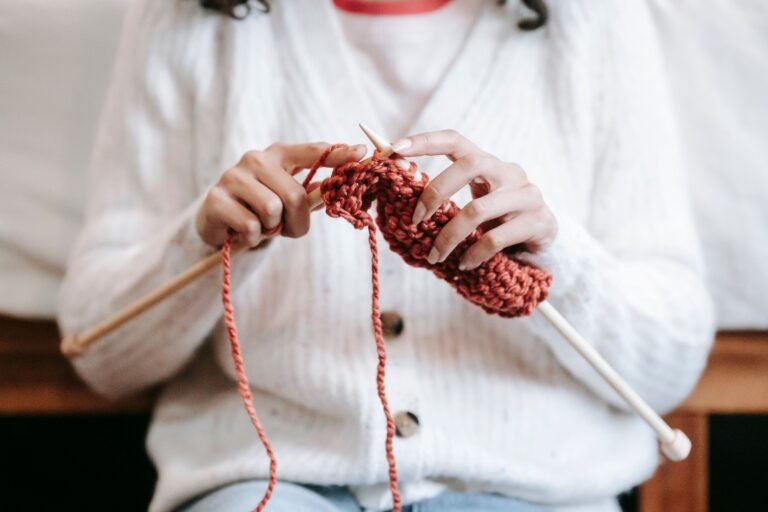
For crafting, you might spend a few minutes setting out your materials, choose one small section to work on and pay attention to the physical process rather than how quickly you finish.
Even cooking or making tea can become a ritual. You can slow down enough to notice the ingredients, the smells and the small movements involved instead of treating the whole thing as another task to rush through.
The activity doesn’t have to look special from the outside.
The meaning comes from the attention you bring to it.
“But I don’t have time.”
You really don’t need a huge block of time.
A ritual can be five or ten minutes. It can happen while your coffee is brewing, during a quiet part of the afternoon or before you settle down for the evening.
You could write three sentences. Work on one tiny section of a craft project. Sit quietly with your tea before starting the rest of your evening.
The goal isn’t duration.
It’s quality of attention.
Five minutes where you’re genuinely present can feel more nourishing than thirty minutes where your mind is somewhere else.
A few things to avoid
The easiest way to lose the point of a ritual is to turn it into another self-improvement project.
You don’t need twelve steps, a complicated schedule or a perfect setup. If creating the ritual becomes more work than enjoying the hobby, simplify it.
Try not to turn it into social media content, either. You don’t need a beautiful setup, a carefully documented routine or an aesthetic version of the experience for it to be meaningful.
And be careful about using rituals to optimize yourself.
Your hobby doesn’t have to make you more productive, creative, successful or accomplished.
Sometimes it can simply make your day feel a little more like your own.
Most importantly, don’t skip the intention.
Adding a candle or playlist might make an activity feel pleasant, but the ritual becomes meaningful when you know what that moment represents for you.
Routines help you manage your life. Rituals can help you truly experience it.
And maybe the most meaningful way to approach your hobbies isn’t to find a way to do more of them, but to become more present for the moments when you already do them.