Hobbies at Home: How a Hobby Can Slow You Down and Soften Your Space
Why the right hobby thrives in its own dedicated place.
The embroidery kit is in a bin under the bed. The good scissors are somewhere in the junk drawer, mixed in with dead batteries and old receipts.
Sound familiar?
You aren’t alone if you find that your hobbies end up in storage bins or junk drawers. You may also find that getting set up takes longer than you would like. And then? The idea you had of pursuing that hobby doesn’t happen.
This isn’t because you stop caring about it, but rather every part of the setup was quietly working against you.
Try picturing this:
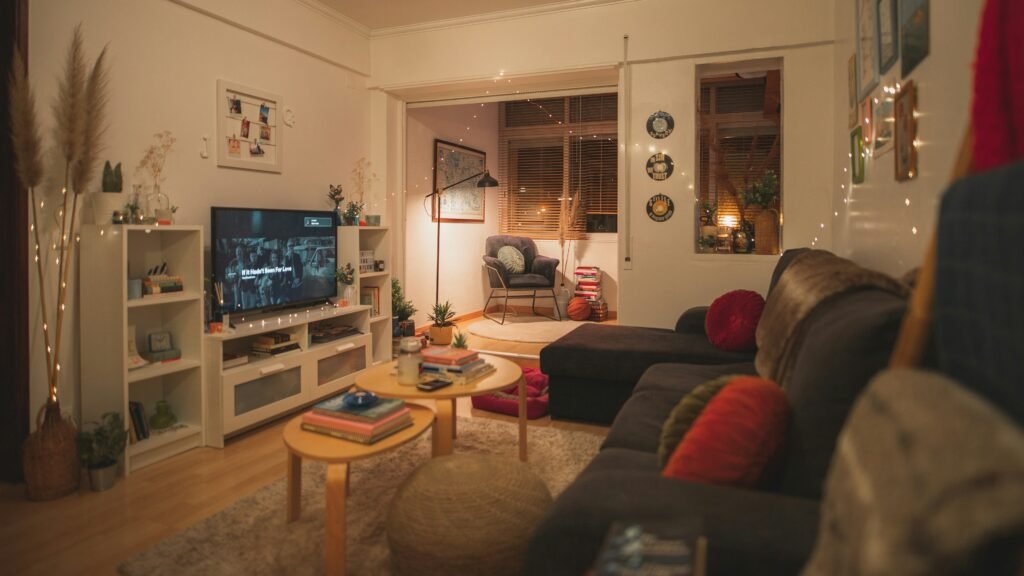
It’s a Tuesday evening. You sit down at a small table by a window, your lamp glowing softly. Your materials are ready, the supplies are neatly organized. Perhaps a candle is lit, not for show, just because the smell of it has become part of the routine. A cup of tea or coffee sits nearby.
You’re not desperate to finish anything, just glad to be enjoying your evening.
Now what’s the difference here? The hobby was never really the hard part. The space around it was.
Most advice about hobbies focuses on discipline. Do it every day. Show up even when you don’t feel like it. But that framing treats a hobby you’re doing from your home, your sanctuary, like it’s a workout you’re forcing yourself into, which misses the entire point of why these hobbies exist in the first place.
A well-set-up space invites the practice. The practice, done often enough, softens and personalizes the space. It’s a loop, and once it’s running, it mostly runs itself.
Why this matters right now
We’re all living with attention that gets pulled in a dozen directions before breakfast.
Against that backdrop, a slow, home hobby isn’t a nice-to-have. It’s one of the few reliable ways to give your nervous system a break from constant stimulation.
This isn’t about optimizing your evenings or adding one more thing to your self-improvement list. It’s actually making the opposite case: some part of your day should be unproductive, repetitive, and low-stakes, on purpose.
The catch is that this kind of hobby needs your home’s permission to exist. It needs a place to happen.
Which brings up a distinction worth sitting with for a second: the difference between a ritual and a routine.
Ritual over routine
A routine is something you complete. Brush your teeth, check the box, move on. There’s a finish line, and the goal is to get there efficiently.
A ritual doesn’t work that way. There’s no finish line to rush toward. You’re not trying to get it over with, you’re taking it in it while it’s happening.
Kneading dough until it feels right under your hands.
Watering plants slowly, one at a time, instead of blasting them all with a hose.
Writing a letter by hand instead of typing it, because the slowness is the point.
Folding laundry while doom-scrolling with the TV on in the background is a routine. Folding laundry on a Sunday afternoon with music on and nothing else competing for your attention can, believe it or not, start to feel like a ritual.
“Cozy hobbies” are supposed to feel easy
There’s a specific category of hobby that’s built for this kind of restoration, and it’s worth naming clearly: the cozy hobby.
No scoreboard, no audience, and plenty of room to be bad at it. Puzzles. Hand-sewing. Slow, unhurried cooking. Letter writing. Keeping a small pot of herbs alive on a windowsill.
Cozy hobbies work specifically because the bar is low. There’s no version of “doing it wrong” that actually matters. And that low bar is exactly what allows your body to relax into the activity instead of treating it like one more task to get right.
If you’ve ever noticed that a hobby you enjoyed suddenly started to feel stressful once you got serious about it, that’s the mechanism flipping. The moment it becomes a performance, it stops doing the calming work it used to do.
What’s actually happening in your body
None of this is just a mood thing. There’s a real physiological reason repetitive hand tasks and warm scents shift you toward rest.
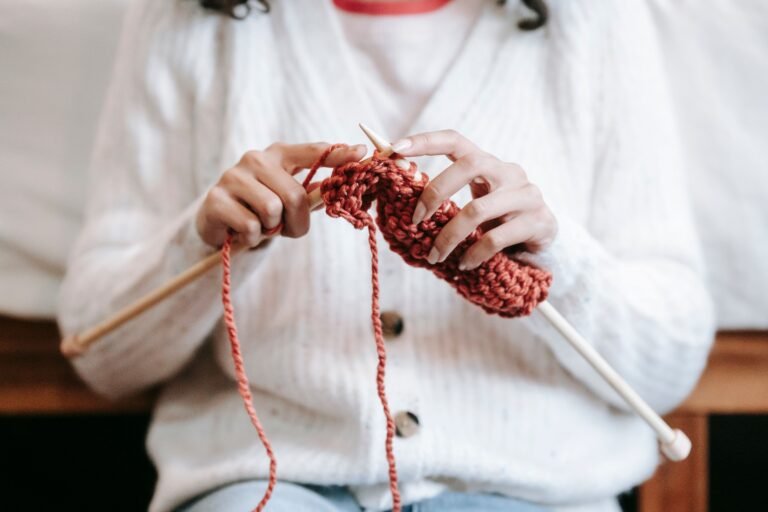
Repetitive hand movements, the kind involved in kneading, knitting, folding, or stitching, can be calming for many people. When a task is rhythmic and predictable, it gives the hands something steady to do and can help anchor attention in the present moment.
Scent can also influence mood and bring back memories quickly. Smell has strong connections with brain systems involved in emotion and memory, which may explain why familiar aromas, such as cedar, vanilla, clove, or something baking, can change how a room feels before we consciously identify the scent.
The effect depends on your personal associations with that smell, so if you’re going to incorporate it, choose something familiar that you enjoy.
Put those two elements together, and the setting of a hobby may matter almost as much as the activity itself. Texture, rhythm, warmth, and scent can make an activity feel more grounding and restorative.
Designing the space that actually invites the hobby
Here’s the honest truth about why most hobbies quietly disappear: it’s rarely a loss of interest. It’s friction. Supplies are scattered across three different rooms. The lighting is harsh and unflattering. There’s no clear spot that says “this is where that happens.” Every one of those small obstacles adds up to a hobby that never gets touched.
A few things make the difference:
- A dedicated nook. This doesn’t require a spare room. A single chair by a window, one corner of a table that’s always left clear, a windowsill with a bit of counter space, all of that counts. What matters is consistency of place, not square footage.
- Accessible tools. Supplies left out in plain sight get used. Supplies packed away in bins get forgotten. If your hobby lives in storage, so does your motivation to start it.
- Soft lighting. Warm, low, directional light tells your body it’s time to wind down before you’ve even picked anything up. Harsh overhead light does the opposite, it keeps you alert and task-focused, which is the last thing you want from a cozy hobby.
- Textures and music. A soft blanket over your lap, a worn wooden bowl for your supplies, a playlist you only put on for this one activity. These become sensory anchors. Over time, your brain starts linking that specific texture or sound directly to the calm state itself, so just sitting down in the spot starts to feel relaxing before you’ve done anything at all.
Once that space exists, the loop starts running on its own.
An inviting setup gets used more.
Getting used more makes the space feel more lived-in, more personal, softer around the edges.
That softness makes it even more inviting the next time.
The corner that’s allowed to just exist
There’s a quiet argument buried in all of this against optimizing every inch of your home for either productivity or Pinterest-worthy aesthetics. Some corners of a house shouldn’t be trying to accomplish anything. Their entire job is to slow you down.
You don’t need to redesign a room to test this. Pick one small hobby you’ve been meaning to get back to. Give it one small, dedicated spot, even if it’s just a tray, on a shelf or a chair by the window. Add one piece of soft lighting or one scent you actually like.
Chances are the hobby doesn’t just survive. It starts pulling you back to that spot on its own, and the space around it slowly starts to feel like yours in a way it didn’t before.