The Ultimate Nursery Organization Guide: Systems That Grow With Your Baby
Why Nursery Organization Is One of the Best Things You Can Do Before Baby Arrives

Bringing home a newborn is exciting, emotional, and a little overwhelming. When you’re surviving on barely any sleep, the last thing you want is to be digging through drawers looking for a clean onesie.
That’s where a well-organized nursery really shines.
The goal isn’t to create a picture-perfect nursery that stays spotless 24/7. It’s to create a space that makes everyday life easier. When everything has a home, diaper changes are quicker, getting dressed is less stressful, and those middle-of-the-night wake-ups feel just a little more manageable.
Good organization also makes life easier for anyone helping out. Whether it’s your partner, grandparents, or a babysitter, clear storage systems mean they can find what they need without asking where every single item is.
And remember to give yourself some grace. Your nursery doesn’t have to be perfect. Focus on creating systems that work for your family instead of worrying whether every basket matches the curtains.
A Simple Timeline for Getting Everything Ready
Preparing the nursery little by little is much less stressful than trying to do everything during the final weeks of pregnancy. Breaking it into smaller steps makes the whole process feel much more manageable.
Around 20 Weeks
Choose your nursery layout and order the big furniture pieces like the crib and dresser. Shipping delays happen more often than we’d like, so it’s nice to get these ordered early.
12–15 Weeks
Finish any painting or wallpaper before furniture arrives. If you’re painting, using low-VOC paint gives the room time to air out well before your baby gets home.
Around 12 Weeks
Install anything that will stay permanently in the room, such as closet systems, wall shelves, or artwork.
About 1 Month Before Baby Arrives
Organize the drawers, stock your diaper station, and make sure your daily essentials are ready to go.
Plan Your Nursery Around Your Daily Routine
One of the easiest ways to make a nursery feel functional is to organize it into simple zones. Instead of thinking about where furniture looks best, think about how you’ll actually use the room every day.
Most nurseries naturally have four main areas:
- Sleeping
- Changing diapers
- Feeding
- Dressing
Try to keep everything you use together in the same zone. For example, if you’re standing at the changing table, diapers, wipes, creams, and a spare outfit should all be within arm’s reach. That way, one hand can stay on your baby while the other grabs what you need.
Safety should always guide your layout, too. Avoid placing heavy shelves, large picture frames, or anything with long cords directly above the crib or changing area. Whenever possible, secure wall-mounted items properly and follow the manufacturer’s installation instructions.
Make the Most of Your Furniture and Vertical Space
Nurseries don’t have to be huge to be functional.
Choosing furniture that serves more than one purpose can save both space and money. A sturdy dresser with a secure changing pad on top works just as well as a traditional changing table, and later it becomes a regular dresser as your child grows. Some cribs even include built-in storage underneath, which is perfect for extra crib sheets or seasonal bedding.
Don’t forget about the walls, either. Vertical storage is often overlooked but can make a big difference.
Some easy ideas include:
- Floating shelves for books and keepsakes
- Pegboards for small baby essentials
- Wall hooks for baby carriers or diaper bags
- Over-the-door organizers for shoes, socks, bibs, and accessories
- A second closet rod to nearly double your hanging space
Using the walls wisely helps free up valuable drawer and floor space.
A Simple System for Baby Clothes
It doesn’t take long before tiny baby clothes seem to multiply overnight. Between gifts, hand-me-downs, and growth spurts, staying organized can become a challenge.
Drawer dividers help keep everything neat, and folding clothes vertically (sometimes called file folding) makes it much easier to see every outfit without digging through stacks.
One of the easiest organization tricks is using a simple three-bin system.
Here’s how it works:
- Too Big: Clothes your baby hasn’t grown into yet.
- Current Size: Everything that’s currently being worn.
- Outgrown: As soon as something no longer fits, toss it straight into this bin instead of putting it back in the drawer.
Closet size dividers can also be incredibly helpful, especially if you’re storing multiple clothing sizes at once. They make it much easier to rotate clothes before your baby outgrows them.
Organization Beyond the Nursery
Even though it’s called a nursery, you’ll probably end up caring for your baby all over the house. Setting up a few extra organization stations can make everyday life much easier.
In the kitchen, consider dedicating a drawer to bottles, pump parts, and feeding supplies. Washable drawer organizers help keep everything tidy while protecting the cabinet from moisture.
It’s also worth putting together a small medical caddy with essentials like:
- Baby thermometer
- Nasal aspirator
- Infant fever reducer (used only as directed by your pediatrician)
- Any dosing information your healthcare provider recommends
Having everything together means you’re not searching through cabinets in the middle of the night.
For daytime diaper changes, a rolling cart or portable diaper caddy is another game changer. Fill it with diapers, wipes, burp cloths, extra outfits, and a few feeding supplies. You can move it from room to room throughout the day and tuck it away when guests come over.
Choose Storage That Grows With Your Child
Babies grow incredibly fast, and so do their storage needs.
Instead of buying nursery-specific organizers that only work for a year or two, look for versatile storage pieces you can keep using as your child gets older.
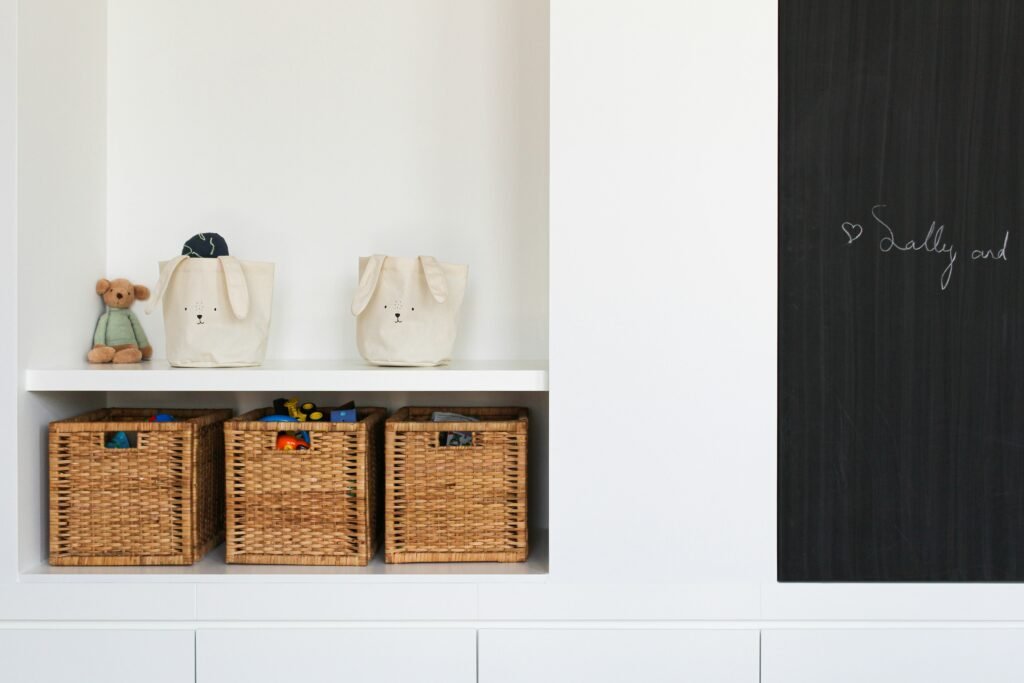
Neutral fabric bins, wooden crates, and simple wire baskets work just as well for toys and books later as they do for diapers and blankets now.
Low shelves are another great long-term investment. At first, they’re perfect for displaying board books and soft toys. As your child becomes a toddler, those same shelves make it easy for them to reach their toys—and eventually learn to put them away themselves.
Keeping Your Nursery Organized Without the Stress
The secret to maintaining an organized nursery is building a few small habits into your routine.
One simple idea is to wash baby laundry every few days instead of waiting until there’s a mountain of clothes. Smaller loads are easier to fold, easier to put away, and help make sure you always have clean sleepers and crib sheets when you need them.
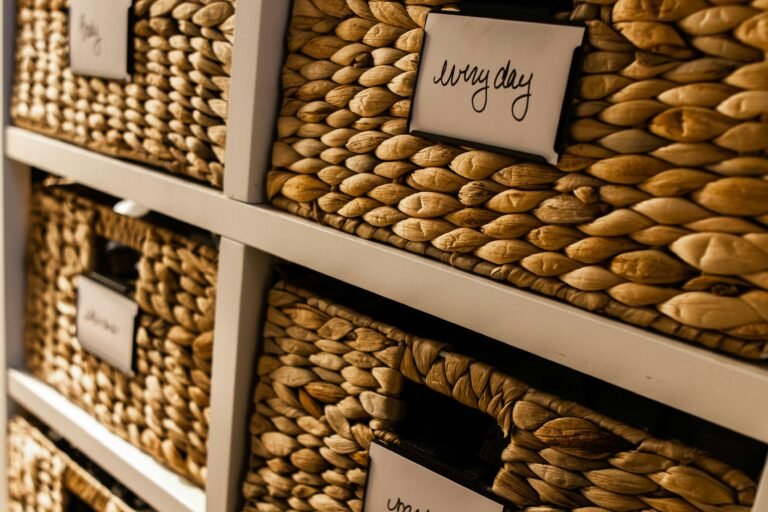
Finally, don’t underestimate the power of labels. Labeling drawers, baskets, and storage bins makes it easier for everyone in the house to put things back where they belong. It saves you from constantly answering, “Where do the extra diapers go?” and helps your organization system stay intact long after those newborn days are over.
At the end of the day, the best nursery organization system is the one that makes your life a little easier. Start with simple, practical solutions, adjust them as your baby grows, and remember that a functional nursery will always be more valuable than a perfectly styled one.