
A slow, sustainable way to clear the physical noise without a single weekend spent hauling garbage bags.
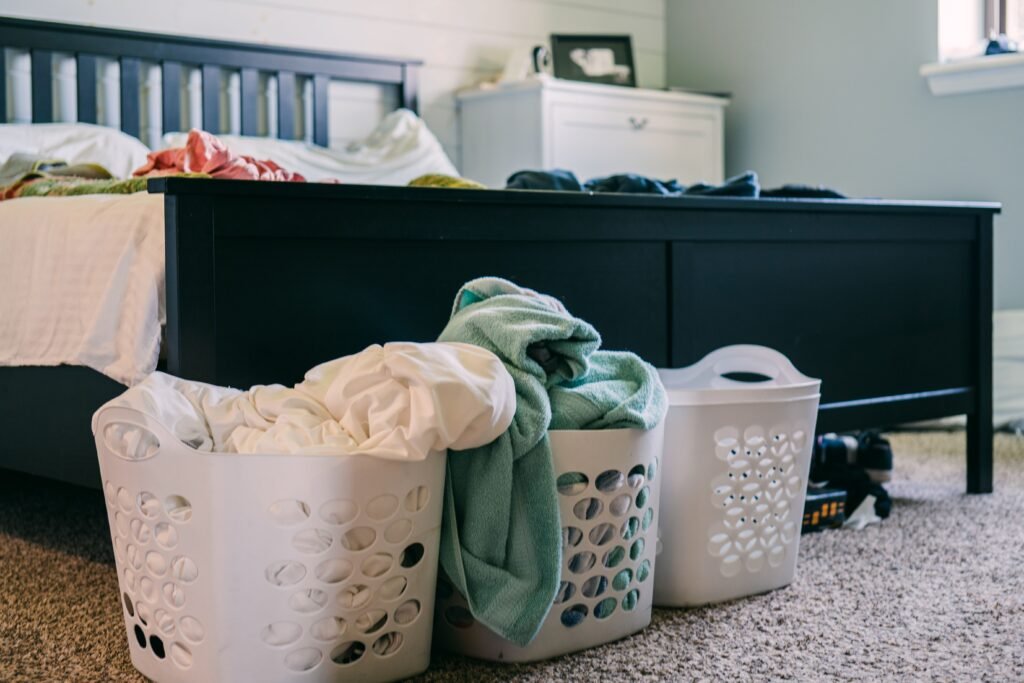
I used to think decluttering meant one brutal weekend. Trash bags everywhere, a rented storage unit, a Marie Kondo marathon that left me too exhausted to enjoy the result. It worked for about six weeks. Then the clutter crept back in, because nothing about that process had changed how I actually live.
The version that stuck was slower and smaller. Fifteen minutes a day, one zone at a time, for thirty days. No donation guilt spirals, no all-or-nothing purges. Just a steady, low-pressure rhythm that let the house catch up with the life I actually wanted to have in it.
If you’ve tried the weekend-blitz approach and watched it unravel, this is the alternative.
Why Small and Slow Beats Big and Fast
Clutter isn’t really a storage problem. It’s an accumulated backlog of tiny decisions you never got around to making: keep or toss, file or trash, fix or replace. A weekend purge tries to make hundreds of those decisions in a single exhausted sprint, which is why it so often ends in decision fatigue and a pile of “maybe” boxes that never get resolved.
Fifteen minutes a day works differently. It’s short enough that you never hit the wall where your brain stops being able to evaluate objects clearly. And because you’re doing it daily, you’re building a habit rather than staging an event. Habits are what hold. Events are what you recover from.
There’s also a quieter benefit. A cluttered room asks something of your attention every time you walk into it. Piles, overflowing drawers, and surfaces you can’t quite use all register as small, unresolved tasks, even if you’ve stopped consciously noticing them. Clearing that noise doesn’t just make a room look bigger. It gives your attention somewhere calmer to land.
The Structure: One Zone, One Day, No Exceptions
The challenge is built around thirty small zones. A “zone” is something you could reasonably clear in fifteen minutes: one drawer, one shelf, the top of one dresser, the inside of one cabinet.
Here’s a sample month broken into weeks, which you can adapt to your own home:
Week 1: Entry points and surfaces The junk drawer, the coat closet, the kitchen counter, the entryway table. These are the zones that collect life’s overflow daily, so clearing them first gives you the fastest visible payoff.
Week 2: Storage and hidden clutter Under the bathroom sink, the linen closet, the pantry shelves, that one kitchen cabinet nobody opens on purpose. This is where expired products and duplicate items tend to live.
Week 3: Sentimental and decision-heavy zones The closet you avoid, the box of cables and chargers, old paperwork, the drawer of gifts you never used. These take a little more emotional energy, which is why they go in week three, once the habit is established and the early wins have built some momentum.
Week 4: Refinement and maintenance Revisit anything that got a half-finished pass. Set up simple systems, a designated spot for mail, a basket for shoes, so the cleared zones stay clear.
The One Rule That Makes It Work
Fifteen minutes, one zone, done. If the timer runs out and the zone isn’t finished, you stop anyway and pick it back up tomorrow. This feels counterintuitive at first. Most people want to push through to “finish.” But the discipline of stopping is what keeps the challenge sustainable across thirty days instead of collapsing by day four.
This is the same principle that makes any daily practice durable, whether it’s a hobby, a workout, or a decluttering habit: small, protected sessions beat sporadic marathons. A short block of focused time, done consistently, produces more change over a month than one heroic burst that burns you out.
Grab my free one page decluttering checklist if you want to start decluttering your home.
What “Twice as Big” Actually Means
The square footage of your home doesn’t change. What changes is how much of it is usable and how much visual and mental noise it’s generating. A cleared counter reads as more space than the same counter buried under mail. A closet where you can see every item reads as more space than one crammed with things you’re not sure you own.
By day thirty, most people report the same thing: nothing looks staged or empty, it just looks like there’s room to breathe. That’s the real target. Not minimalism for its own sake, just a home that isn’t quietly asking for your attention every time you walk through it.